
Top 10 Online Shopping Sites in Nepal that are Shaping Digital Future
In the past few years, we have witnessed unprecedented growth in online shopping adoption, fueled by increasing internet penetration, smartphone accessibility, and shifting consumer preferences. Today, numerous e-commerce platforms compete for market share, each offering distinctive approaches to meeting the diverse needs of Nepalese shoppers. Since Thamel.com became Nepal’s first registered e-commerce website back in 2000, the online shopping landscape has undergone remarkable growth and evolution.
The COVID-19 pandemic significantly accelerated this transition, as lockdowns and social distancing measures prompted even hesitant consumers to explore digital alternatives to traditional brick-and-mortar stores.
In this comprehensive analysis, we’ll explore the key factors driving Nepalese consumers’ growing preference for online shopping, examine the challenges they face, and provide detailed insights into the top 10 online shopping sites in Nepal.
TL;DR
Nepal’s e-commerce landscape is now dominated by Daraz (1M monthly visitors, backed by Alibaba) and Hamrobazar (Nepal’s oldest C2C marketplace with innovative Buy Now, Pay Later options). Specialized platforms are gaining significant traction – Foodmandu leads food delivery category with 800+ restaurant partnerships and 2,000 daily orders; Jeevee dominates health/beauty category with Nepal’s first semi-automated fulfillment center; and Hukut and Mudita Store demonstrate the viability of category-focused models.
Global E-Commerce Market in 2025
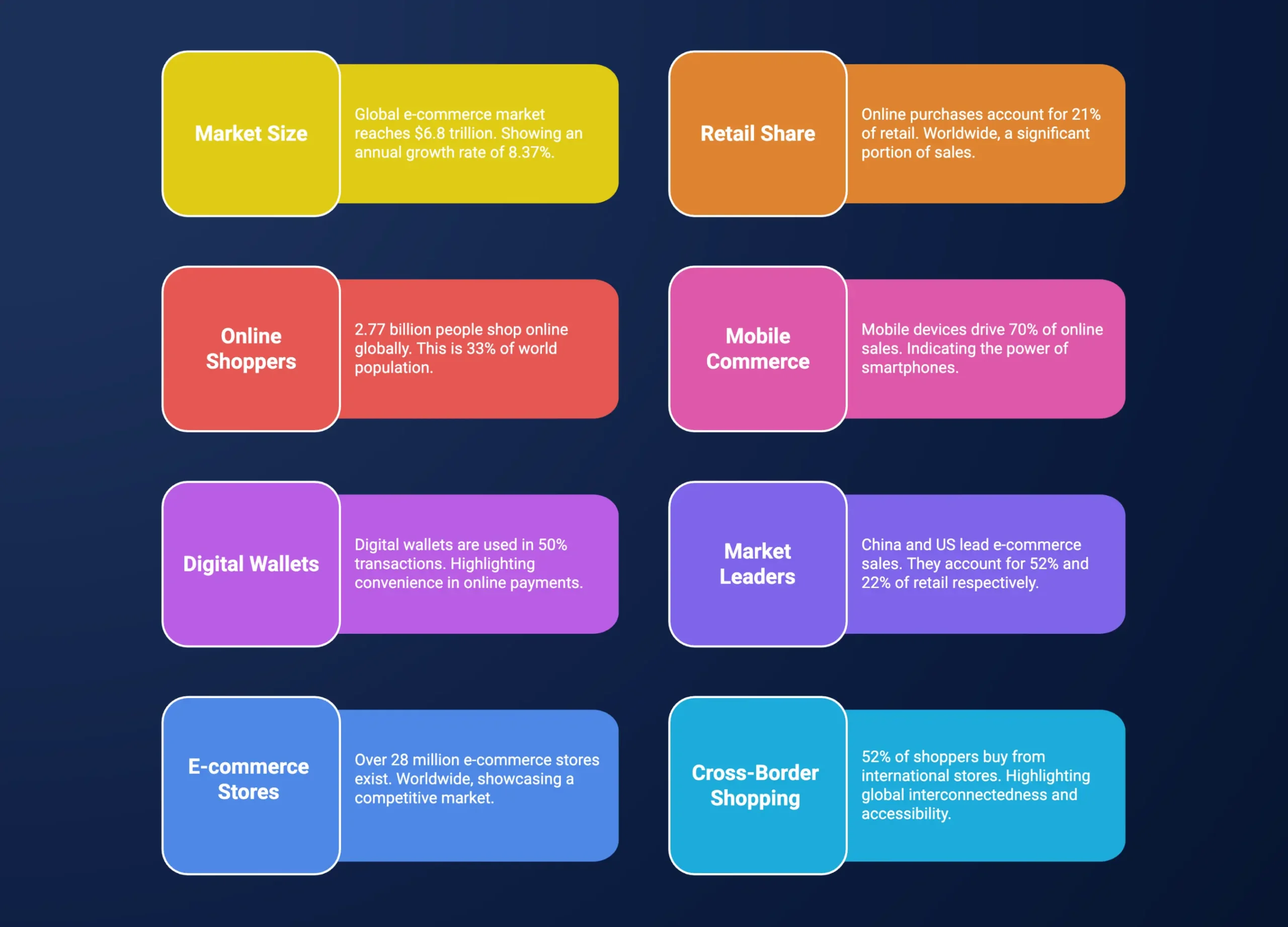 The global e-commerce market is experiencing unprecedented growth in 2025, with sales projected to surpass $6.8 trillion, representing an 8.37% year-over-year increase and now comprising 21% of all retail purchases worldwide.
Approximately one-third of the global population (2.77 billion people) now shops online, with mobile commerce dominating the landscape at 70% of all e-commerce transactions. China leads global markets with $3.2 trillion in e-commerce sales (52% of its retail), followed by the United States at $1.8 trillion (22% online retail share).
With over 28 million e-commerce stores operating globally and cross-border shopping continuing to rise (52% of online shoppers purchase internationally), the sector is projected to maintain robust growth, potentially reaching $8 trillion by 2027.
Criteria for Ranking Nepal's Top E-Commerce Platforms
While ranking Nepal’s leading online e-commerce websites, I have considered multiple metrics to ensure a comprehensive evaluation:
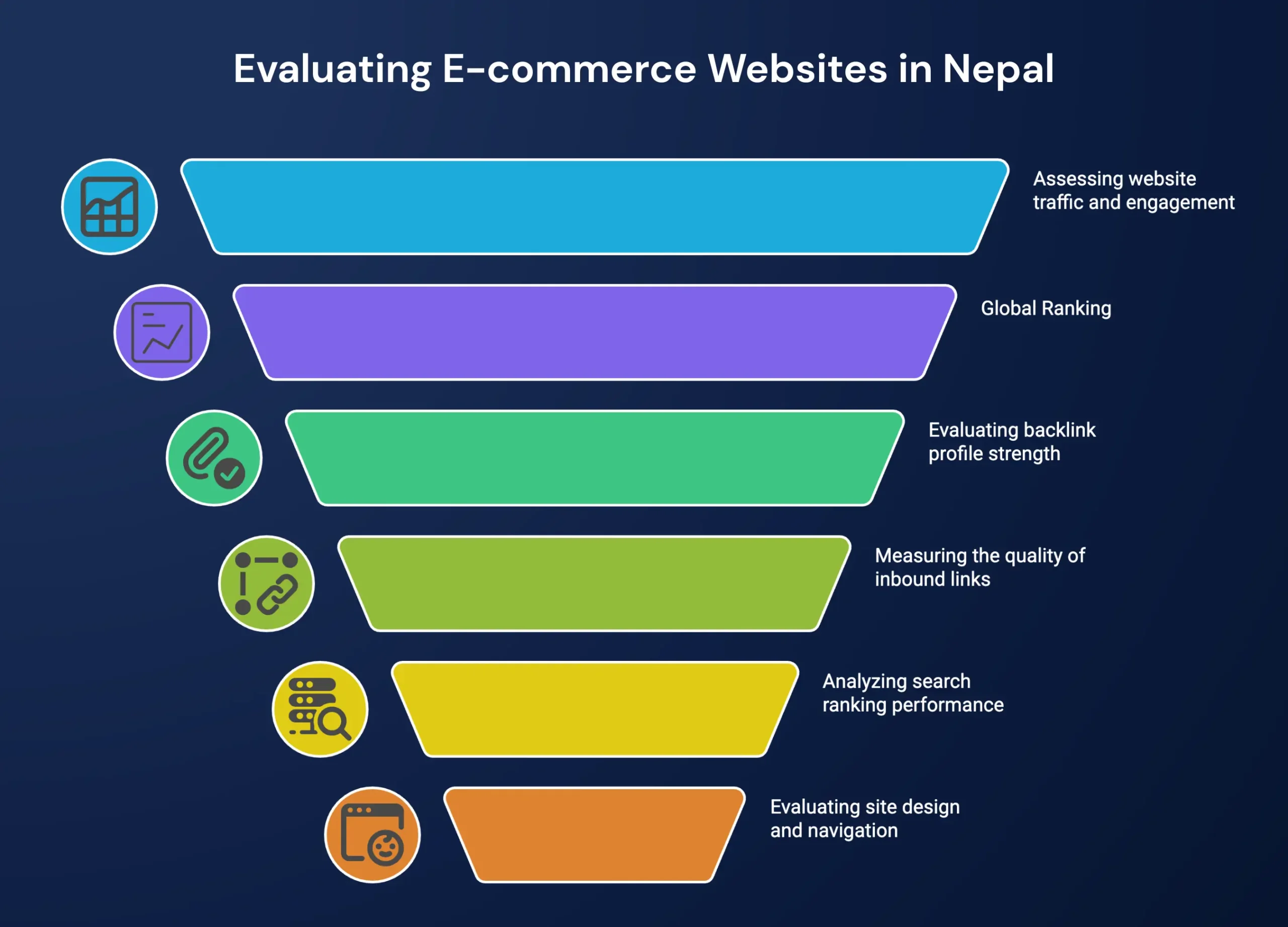
- Ahrefs Global Rank: A measure of website traffic and engagement specific globally.
- Domain Rating (DR): An assessment of each site’s backlink profile strength and overall authority.
- Traffic Volume: Monthly visitor statistics and user engagement metrics.
- Trust Flow: Measurement of link quality pointing to each website.
- Citation Flow: Quantity of links pointing to each site.
- Search Rankings: Performance in search results for relevant e-commerce queries.
- User Experience: Site design, mobile responsiveness, and ease of navigation.
- Product Range: Availability and depth of available merchandise.
- Payment Options: Options and security of payment methods.
- Delivery Infrastructure: Speed, reliability, and geographic coverage.
These metrics provide a data-driven foundation for our rankings, complemented by qualitative analysis of each platform’s unique features and customer experiences.
Top 10 E-Commerce Sites Comparison Data
While analyzing why certain online shopping platforms in Nepal scale faster than others, I’ve seen how technical SEO, site structure and search intent alignment play a major role.
This reflects how I approach SEO, focusing on fundamentals that support sustainable growth rather than short-term traffic spikes.
| Website | Global Rank | DR | Keywords | Traffic | Trust Flow | Citation Flow |
|---|---|---|---|---|---|---|
| Daraz | 47,784 | 74 | 149K | 1M | 39 | 53 |
| Hamrobazar | 962,962 | 48 | 41.9K | 203K | 29 | 34 |
| Foodmandu | 906,854 | 48 | 5.5K | 19.7K | 8 | 39 |
| Jeevee | - | 30 | 12K | 21.8K | 3 | 27 |
| MeroShopping | - | 38 | 4.7K | 8.2K | - | 24 |
| Muncha | - | 44 | 5.4K | 6K | 9 | 30 |
| Smart Doko | - | 34 | 3.5K | 6K | 2 | 29 |
| Deal Ayo | - | 26 | 4K | 2.9K | - | 34 |
| Hukut | - | 33 | 16.6K | 171K | - | - |
| Mudita Store | - | 19 | 5.3K | 33.1K | - | - |
Top 10 Online Shopping Sites in Nepal
1. Daraz
Daraz stands as Nepal’s undisputed e-commerce leader, operating as part of the broader Daraz Group across South Asia. With a mission to uplift communities through commerce and technology, Daraz has revolutionized online shopping in Nepal since its entry into the market. As of 2018, Nepal’s e-commerce market was estimated at $25 million, with Daraz experiencing an extraordinary 300% annual growth rate. The company is on track to reach $100 million in annual sales, demonstrating remarkable market penetration in a relatively short period.
Founded in 2012 by Farees Shah and Muneeb Maayr, Daraz initially launched as a fashion retailer in Pakistan before expanding regionally. The platform entered Nepal in 2014 under the Kaymu brand, later rebranding as Daraz following acquisition by the Daraz Group in 2016. A pivotal moment came in May 2018 when Alibaba Group acquired Daraz for an estimated $150-200 million, providing the platform with access to world-class technology infrastructure and resources. This acquisition represented a strategic move in Alibaba’s global expansion strategy to target 2 billion consumers worldwide.
At the group level, Daraz recently underwent a leadership transition, with James Dong, CEO of Lazada Group, succeeding founder Bjarke Mikkelsen as acting CEO. In Nepal specifically, Aanchal Kunwar made history in 2022 as the first female Managing Director for Daraz’s operations in the country.
Market Position
- Ahrefs Rank: #47,784
- Domain Rating: 74
- Keywords: 149K
- Traffic: 1M (monthly)
- Trust Flow: 39
- Citation Flow: 53
Product Offerings
Daraz features an exceptionally diverse product catalog spanning:
- Fashion and apparel
- Electronics and mobile devices
- Health and beauty products
- Home appliances and furniture
- Groceries and household essentials
- Baby products and toys
- Sporting goods and equipment
- Books and stationery
The platform operates on a marketplace model, allowing thousands of independent sellers to list their products, fostering variety and competitive pricing.
Unique Selling Points
First-Mover Advantage: As an early entrant in Nepal’s e-commerce landscape, Daraz established brand recognition and consumer trust before competitors gained traction.
Multi-Seller Platform: By empowering local businesses and entrepreneurs to sell online, Daraz supports the broader Nepalese economy while offering consumers unprecedented product diversity.Trust
Mechanisms: Comprehensive ratings, reviews, and transparent seller information help shoppers make informed decisions.
Alibaba Backing: The connection to global e-commerce giant Alibaba provides technological expertise and operational best practices.
User Experience: A polished interface and diverse payment options create a streamlined shopping journey.
Customer Satisfaction
Consumer feedback on Daraz presents a mixed picture:
Positive Aspects:
- Convenience and accessibility
- Extensive product selection
- Critical service during pandemic lockdowns
Areas of Concern:
- Delivery delays and timing issues
- Refund processing complications
- Inconsistent customer service experiences
- Concerns about counterfeit products
The platform’s Sitejabber rating of 1.7/5 (based on regional reviews) suggests room for improvement in customer satisfaction.
Strengths
- Dominant market position in Nepal’s e-commerce sector
- Robust security protocols and data protection
- Access to authentic branded merchandise
- Multiple payment options,is cash-on-delivery
- Strategic logistics partnerships and delivery infrastructure
Improvement Areas
- Refund and return processes require streamlining
- More rigorous product authenticity verification is needed
- Delivery reliability varies significantly by location
- Customer service responsiveness fluctuates during peak periods
- Limited brand recognition for newer sellers and products
As Nepal’s leading online shopping destination, Daraz continues to evolve its offerings while working to address these challenges and maintain its market leadership.
2. Hamrobazar
Founded in 2005 by Prabal Saakha with support from Pranav and Pranay Shrestha, Hamrobazar represents Nepal’s longest-running online marketplace success story. In 2021, the platform entered a new era when MNS Investments acquired it for NPR 10 crores (approximately USD 850,000), initiating a phase of technological modernization and service expansion.
Business Model and Products
As Nepal’s largest customer-to-customer (C2C) and business-to-customer (B2C) online marketplace, Hamrobazar facilitates transactions across diverse categories:
- Electronics and technology
- Vehicles and automotive parts
- Real estate listings
- Fashion and accessories
- Home appliances
- Books and educational materials
- Pets and animal supplies
- Professional services
The platform’s distinctive approach features free ad listings for both individuals and businesses, direct buyer-seller communication channels, and the option for in-person inspection before purchase – combining digital convenience with traditional shopping safeguards.
Unique Selling Proposition
Buy Now, Pay Later (BNPL): Launched in September 2024 in partnership with Foneloan, this innovative payment solution allows eligible users to purchase over 250 products through interest-free or standard EMI options via major Nepali banks’ mobile applications.
Accessibility: The BNPL feature requires no upfront payment, with users simply scanning a QR code and completing purchases through their preferred banking app.
Enhanced User Experience: Advanced search filters, comprehensive user ratings, secure messaging systems, and a seamless interface create an intuitive platform for both buyers and sellers.
Market Position
Hamrobazar has demonstrated consistent growth in key metrics:
- Global Rank: #962,962
- Category Rank: #617 in Computers, Electronics, and Technology
- Monthly Search Traffic: 203K
- Domain Rating: 48, supported by 5,900 referring websites
Customer Satisfaction
The platform enjoys a strong reputation for:
- User-friendly design and functionality
- Established trust within the Nepalese market
- Comprehensive product diversity
- Financial flexibility through recent BNPL integration
However, users have identified several areas for improvement:
- Inconsistent verification of product quality and authenticity.
- Limited seller verification processes.
- Occasional communication delays between parties.
- Variable delivery experiences.
Strengths
- Market Leadership: Hamrobazar maintains its position as Nepal’s most trusted online marketplace.
- Accessibility: Free listings and direct communication lower barriers to entry.
- Financial Innovation: The new BNPL feature enhances affordability for consumers.
- User Engagement: Low bounce rates, high pages per visit, and extended session durations demonstrate strong user interest.
- Search Visibility: Dominant organic search presence and keyword leadership in Nepal.
Improvement Areas
- Limited advanced seller verification and consumer protection mechanisms.
- Absence of comprehensive return/refund policies for problematic purchases.
- Technology infrastructure lags behind global marketplace standards.
- Growing competition from social media marketplaces and specialized e-commerce sites.
- Geographic reach primarily limited to Nepal with minimal international expansion.
Hamrobazar’s enduring popularity in the Nepalese market demonstrates its fundamental understanding of local consumer needs, despite areas requiring continued development.
3. Foodmandu
Manohar Adhikari pioneered Nepal’s food delivery scene when he launched Foodmandu in November 2010. The idea came from his own struggles finding good food during long workdays in Kathmandu, spotting a gap in the market for reliable food delivery. Headquartered in Anamnagar, Kathmandu, the company has grown from a small startup to a household name across multiple Nepalese cities.
Products and Services
From its food delivery roots, Foodmandu has expanded to offer:
Food Delivery: Partnerships with over 800 restaurants across Kathmandu, Lalitpur, Bhaktapur, Kirtipur, Pokhara, and Chitwan.
Grocery Service: “Foodmandu Fresh” delivers groceries, vegetables, and dairy products.Beverage
Delivery: “Foodmandu Bar” brings alcoholic and non-alcoholic drinks to your door.
Quick Grocery: Launched in 2024, “Foodmandu OneMart” offers over 700 products with fast delivery within 3km of Gairidhara, Kathmandu.
Customers can order through the website, mobile app, or phone calls, with payment options including cash on delivery, digital wallets, online banking, and cards. They employ over 120 staff and 300+ delivery riders.
Unique Selling Proposition
First-Mover Advantage: Foodmandu established its market position before international competitors like Zomato and Swiggy gained traction in neighboring India.
Extensive Restaurant Network: With over 800 active restaurant partners, the platform offers unparalleled cuisine diversity ranging from local Nepalese specialties to international options.
Multi-vertical Strategy: The expansion beyond restaurant food into groceries and beverages creates a comprehensive food and beverage ecosystem.
Technological Infrastructure: A user-friendly app featuring smart search capabilities, real-time order tracking, and integrated feedback mechanisms enhances customer experience.
Customer Loyalty: Frequent promotions, flash sales, and an established loyalty program incentivize repeat purchases.
Financials and Growth
Foodmandu has demonstrated impressive financial performance:
- Annual Order Value: Rs 75 crore (2024-25 fiscal year)
- Year-on-Year Growth: 40% increase in order value
- Daily Order Volume: Approximately 2,000 orders
- Customer Base: Over 350,000 unique customers served
- External Investment: Rs 46 crore (~$4 million) from Dolma Impact Fund in 2023
The company continues to prioritize market expansion and service quality improvement over short-term profitability, maintaining its position as Nepal’s food-tech sector leader despite operating at a loss.
Customer Satisfaction
Foodmandu mainly serves urban consumers aged 20-50, with students and working professionals as their biggest customer groups. The service achieves high satisfaction rates for:
- Convenience and accessibility
- Food variety and quality
- Reliable delivery (45-minute average delivery time)
- Responsive customer service
However, user feedback indicates occasional issues with app performance, mapping accuracy, and delivery delays during peak periods.
Strengths
- Brand Leadership: Strongest recognition in Nepal’s online food delivery market
- Extensive Network: 800+ restaurant partners plus grocery and beverage options
- Technology Integration: User-friendly app with real-time features
- Customer Retention: High repeat usage and loyalty
- Logistics Infrastructure: Large, trained delivery team
- Innovation Culture: Regular service expansions and platform updates
Improvement Areas
- Geographic Limitations: Service primarily available in major urban centers
- Pricing Concerns: Delivery charges perceived as high for short distances
- Technical Issues: Occasional app and website performance problems
- Delivery Consistency: Variable quality during high-demand periods
- Restaurant Availability: Listed establishments sometimes closed or unavailable
- Workforce Satisfaction: Reported concerns about delivery rider compensation
- Profitability Challenges: Still not profitable after 14 years of operation
4. Jeevee
Founded in July 2019, Jeevee quickly made its mark in Nepal’s e-commerce landscape under the leadership of founder and CEO Aabhushan Kansakar, a Kathmandu-based engineer and entrepreneur with a vision for specialized online retail. Despite its relatively recent entry into the market, Jeevee has achieved impressive growth, focusing on product categories that bigger platforms often overlook.
Business Model and Products
Jeevee operates as Nepal’s largest homegrown e-commerce platform specializing in health, baby, and beauty products, though they’ve strategically expanded into gadgets, fashion, appliances, and household items. They stock over 300,000 products from more than 1,500 brands, with particularly strong offerings in:
- Makeup, skincare, hair care, and fragrances
- Personal care and wellness products
- Baby care and maternity essentials
- Household necessities and appliances
- Select gadgets and fashion items
A distinctive operational strength is Jeevee’s 15,800-square-foot semi-automated fulfillment center- Nepal’s first such facility, which enables 90% on-time delivery performance. They offer nationwide shipping with standard rates and a “Namaste Doctor” online health consultation service, combining online shopping with wellness support.
Unique Selling Proposition
Authenticity Guarantee: Jeevee maintains a dedicated team that ensures all products are genuine and quality-checked, addressing a common concern in Nepal’s e-commerce environment.
Homegrown Technology: Entirely developed and operated by Nepali professionals, Jeevee’s platform features sophisticated analytics and machine learning/AI models specifically tailored to local market needs.
Semi-Automated Fulfillment: Their pioneering investment in automation gives them a big advantage for efficient and reliable order processing.
Category Leadership: Jeevee has established itself as Nepal’s #1 destination for health, baby, and beauty products, offering the market’s largest curated collection in these segments.
Healthcare Integration: The “Namaste Doctor” online consultation service adds valuable functionality that complements the platform’s health and wellness product offerings.
Customer-Centric Approach: The company emphasizes quality, affordability, and prompt service, supported by strong digital marketing and customer engagement strategies.
Market Position
While Jeevee doesn’t publicly disclose detailed financial information, the platform has demonstrated rapid expansion since its 2019 launch, now ranking among Nepal’s top e-commerce destinations. Key metrics include:
- Domain Rating: 30
- Keywords: 12,000
- Traffic: 21,800 monthly visitors
- Trust Flow: 3
- Citation Flow: 27
The company’s year-on-year growth in product range, customer base, and market share places it among Nepal’s most promising e-commerce ventures, though it remains focused exclusively on the domestic market without significant international operations or presence.
Strengths
- Category Specialization: Recognized expertise in health, beauty, and baby products.
- Product Authentication: Strong reputation for genuine merchandise.
- Technological Innovation: Locally developed systems optimized for Nepali consumers.
- Fulfillment Efficiency: Semi-automated warehouse operations enabling consistent delivery.
- Healthcare Value-Add: Integration of medical consultation services with e-commerce.
Areas for Improvement
- Limited Categories: Despite expansion, still more focused than general marketplaces.
- Geographic Coverage: Delivery experience may vary outside major urban centers.
- Brand Awareness: Less established than older competitors in the general market.
- Financial Transparency: Limited public information on growth metrics and profitability.
- International Expansion: No significant presence beyond Nepal’s borders.
As Jeevee continues to refine its specialized approach to e-commerce, its focus on product authenticity and fulfillment efficiency positions it well for continued growth in Nepal’s developing online marketplace.
5. MeroShopping
MeroShopping emerged as an early player in Nepal’s e-commerce scene when it launched on September 22, 2013, though some sources suggest initial operations began as early as 2012. Sitaram Rimal founded and serves as Managing Director of the platform, which operates as a sister company of Web Link Nepal IT Institute Pvt. Ltd., a leading web design and hosting company. This connection gives MeroShopping strong technical foundations and digital expertise.
Business Model and Products
Operating primarily as a business-to-consumer (B2C) platform with some business-to-business (B2B) features, MeroShopping allows both individual consumers and business buyers to access a diverse product catalog across many categories:
- Personal care products
- Electronics and appliances
- Apparel for men, women, and children
- Sports and outdoor equipment
- Office supplies and business essentials
- Fashion accessories and jewelry
- Books and educational materials
- Daily household necessities
A distinctive feature of MeroShopping’s business model is its cross-border product sourcing, particularly from Indian platforms like Flipkart and Myntra, expanding the selection available to Nepali consumers. The platform offers free home delivery in major urban centers with fast service within 24 hours in Kathmandu Valley. MeroShopping maintains direct relationships with customers without middlemen.
Unique Selling Proposition
Extensive Selection: MeroShopping positions itself as a one-stop shopping destination with products spanning numerous categories.
Competitive Pricing: The platform leverages direct supplier relationships to negotiate favorable terms and pass savings to customers.
Fast Delivery: Free and fast home delivery, particularly in Kathmandu Valley, with expanding coverage to other major cities.
Customer-Centered: The company emphasizes personal attention and relationship-building, treating customers “as friends” rather than transactions.
User Experience: Clear product descriptions, quality images, and intuitive navigation enhance the shopping journey.
Community Engagement: MeroShopping organizes challenges and contests to foster customer participation and loyalty.
Market Position
With a Domain Rating of 38, MeroShopping attracts approximately 8,200 monthly visitors and ranks for 4,700 keywords.
The platform’s revenue model combines direct product sales and affiliate marketing, posting advertisements for partner organizations, and charging commissions. MeroShopping serves customers across major Nepalese cities, including Kathmandu, Bhaktapur, Lalitpur, Pokhara, Butwal, Chitwan, Dharan, Surkhet, Birgunj, Biratnagar, Jhapa, and Nepalgunj.
Customer Satisfaction
Customer feedback for MeroShopping highlights several strengths:
- Trouble-free shopping experience
- Clear product descriptions and specifications
- Quality packaging and presentation
- Prompt delivery within service areas
- Friendly and helpful staff interactions
These factors contribute to strong customer loyalty and satisfaction, with many shoppers returning for repeat purchases and referring friends and family to the platform.
Areas identified for improvement include:
- Website and app design aesthetics compared to competitors
- Limited order tracking capabilities
- Android-only mobile app (no iOS support)
- Restricted payment partner options
- Delivery delays to remote locations
- Security and privacy concerns
Strengths
- Established Market Presence: Operating since 2012/2013, MeroShopping benefits from experience and customer familiarity
- Cross-Border Selection: Access to Indian marketplace products expands consumer choices
- Geographic Coverage: Service to multiple cities across Nepal
- Customer Relationships: Personal approach to service and support
- Technical Foundation: Backing from Web Link Nepal provides technological expertise
Areas for Improvement
- User Interface: Website and app design require modernization
- Platform Limitations: Order tracking functionality and iOS app development needed
- Payment Ecosystem: Expanding banking and payment partnerships would enhance convenience
- Rural Delivery: Service to remote areas requires strengthening
- Digital Security: Addressing privacy and transaction security concerns would build trust
As one of Nepal’s early established e-commerce platforms, MeroShopping balances its experience advantage against the need for continued technical innovation to maintain competitiveness in an increasingly crowded marketplace.
6. Muncha
With roots stretching back to 2000, Muncha stands as one of Nepal’s earliest e-commerce platforms, representing the digital evolution of Muncha House—a traditional retail business from the 1920s. Founder and CEO Amrit Man Tuladhar created the online presence after returning from the United States and working at Himalayan Bank, bringing international e-commerce exposure to the Nepalese market. Headquartered in New Road, Kathmandu, Muncha combines century-old retail heritage with digital innovation.
Business Model and Products
Unlike many competitors that focus on general merchandise, Muncha pioneered a specialized approach centered on online gifting, particularly catering to non-resident Nepalis (NRNs) wanting to send presents to family and friends in Nepal. The platform’s distinctive product range includes:
- Premium spirits and beverages
- Digital and physical gift vouchers
- Fresh cakes, sweets, and bakery items
- Flowers, plants, and floral arrangements
- Soft toys and gift items
- Essential groceries and daily necessities
- Restaurant takeaway meals
- Festival and special occasion gifts
Beyond merchandise, Muncha has diversified into complementary services including money transfer, online remittance, business directory listings, and a proprietary online payment gateway (iPay.com.np), creating an integrated ecosystem for overseas Nepalese maintaining connections with home.
Unique Selling Proposition
First-Mover Legacy: As one of Nepal’s earliest e-commerce ventures, Muncha brings nearly 25 years of digital retail experience to its operations.
Gifting Specialization: The platform focuses on curated, high-quality presents suitable for personal occasions, cultural festivals, and special celebrations, with nationwide delivery capability.
Emotional Connectivity: Muncha’s marketing and service approach emphasizes bridging geographical distances between family members and friends, adding emotional resonance to transactions.Premium
Customer Service: The company prioritizes the emotional significance of gift-giving, with dedicated service representatives ensuring timely and careful delivery even to remote locations.
Quality Assurance: Muncha’s curation process emphasizes carefully selected products that appropriately represent the sender’s care and thoughtfulness.
Market Position
With a Domain Rating of 44, Muncha attracts 6,000 monthly visitors while ranking for 5,400 keywords. The platform maintains steady relevance through a loyal customer base among non-resident Nepalis and local consumers, though it faces increased competition from newer, more aggressive e-commerce players. Revenue streams include direct sales from gifts and groceries, complemented by commissions from third-party sellers participating in its marketplace model.
Customer Satisfaction
Muncha enjoys particular recognition for several service strengths:
- Reliable and timely delivery, even to challenging locations
- Thoughtfully curated gift selections for diverse occasions
- Premium product quality and careful packaging
- Responsive and solution-oriented customer service
These factors contribute to Muncha’s enduring reputation among non-resident Nepalis seeking to maintain connections with family and friends at home.
Areas for potential improvement include:
- Higher price points compared to general e-commerce platforms
- Limited product diversity beyond gifting categories
- Website modernization needs compared to newer competitors
- Service orientation sometimes emphasizing tradition over innovation
Strengths
- Trusted Heritage: Nearly 25 years of e-commerce operations builds confidence
- Gifting Expertise: Deep understanding of diaspora needs and cultural gift-giving traditions
- Delivery Reliability: Consistent on-time performance even to remote areas
- Service Quality: Personal attention and commitment to successful gift experiences
- Marketplace Evolution: Expansion to allow third-party sellers broadens selection
Areas for Improvement
- Digital Experience: Website and technology infrastructure would benefit from modernization
- Premium Positioning: Higher price points may deter value-conscious shoppers
- Category Limitations: Narrower product range compared to general marketplaces
- Marketing Approach: Less aggressive promotion compared to venture-backed competitors
- Scale Considerations: Smaller team and measured growth strategy limits expansion speed
As Nepal’s e-commerce scene becomes more competitive, Muncha’s challenge is balancing its established gifting specialization with strategic modernization to stay relevant with both traditional customers and younger consumers.
7. Smart Doko
As a subsidiary of IMS Group, Smart Doko entered the e-commerce market in 2016 with significant corporate backing and resources. While the platform doesn’t prominently feature individual founders, it operates under the executive leadership structure of its parent company, bringing established business practices and financial stability to its operations from inception. Headquartered in Kathmandu, Smart Doko represents IMS Group’s strategic investment in Nepal’s digital retail future.
Business Model and Products
Smart Doko operates as a comprehensive business-to-consumer (B2C) e-commerce megastore while also supporting third-party vendors within its ecosystem. The platform’s extensive catalog features over 10,000 products across diverse categories:
- Electronics and digital gadgets
- Home and kitchen appliances
- Groceries and everyday essentials
- Fashion items and accessories
- Personal care and health products
- Baby and children’s merchandise
- Sporting goods, toys, and leisure items
Smart Doko’s delivery network provides nationwide coverage with tiered service options: same-day delivery within Kathmandu Valley and standard delivery (up to three days) for locations outside the capital region.
Payment flexibility includes cash on delivery, card payments, and multiple digital wallet options, including Cellpay and eSewa.A distinctive feature of the Smart Doko model is its customer loyalty program – shoppers earn points with every purchase that can be redeemed against future orders. The platform also offers digital gift cards for personal use or gifting, enhancing convenience for special occasions.
Unique Selling Proposition
Fast Delivery: Smart Doko emphasizes prompt and reliable fulfillment, with express options available in Kathmandu and surrounding areas.
Rewards System: The platform’s innovative points system incentivizes repeat purchases and builds long-term customer relationships.
Product Authenticity: All merchandise is sourced through authorized vendors with legitimate documentation, addressing common consumer concerns about counterfeit goods.
Personalized Shopping: Implementation of AI-driven recommendation engines creates tailored product suggestions based on browsing and purchase history.
Customer Support: Smart Doko focuses on seamless shopping experiences with accessible support channels and straightforward communication.
Corporate Foundation: The backing of IMS Group provides financial stability and operational resources beyond those available to many independent e-commerce startups.
Market Position
While Smart Doko doesn’t publicly disclose detailed financial information or valuation figures, the platform is recognized as one of Nepal’s fastest-growing e-commerce destinations, with ongoing investment in logistics infrastructure and technological capabilities. The company maintains a strong reputation for reliability and innovation within Nepal’s digital commerce landscape, though its operations remain focused on the domestic market without significant international expansion.
Customer Satisfaction
Smart Doko receives generally positive feedback, particularly regarding:
- Fast and dependable delivery service, especially in urban areas
- User-friendly website and app interfaces
- Seamless payment processing integration
- Diverse product selection at competitive prices
- Responsive and helpful customer service
Areas identified for improvement include:
- Occasional delivery delays, particularly for regions outside Kathmandu Valley
- Instances of order cancellations without proactive notification
- Opportunities for enhanced product description detail and interactive features
- Variable experiences with delivery tracking and status updates
Strengths
- Delivery Efficiency: Particularly strong performance in urban service areas
- Customer Loyalty: Reward points system encourages repeat business
- Product Diversity: Wide merchandise selection across multiple categories
- Service Quality: Strong support infrastructure and user-friendly platforms
- Corporate Stability: IMS Group backing ensures operational continuity
- Technological Investment: AI-driven personalization enhances shopping experience
Areas for Improvement
- Geographic Consistency: Service quality varies between urban centers and outlying regions
- Communication Systems: Order status notifications and update protocols need refinement
- User Experience Details: Product information presentation and interactive features require enhancement
- Digital Payment Adoption: While improving, cash on delivery remains dominant for many users
- Rural Service: Delivery to remote areas presents ongoing logistical challenges
Smart Doko’s corporate backing provides advantages in scale and investment capacity as it continues developing its position in Nepal’s increasingly competitive e-commerce market.
8. Deal Ayo
While specific establishment details and founder information for Deal Ayo remain less publicly documented than some competitors, the platform has established itself as a prominent player in Nepal’s e-commerce ecosystem over recent years. Operating as a privately held enterprise without disclosed information about parent companies or major investors, Deal Ayo has focused on building market presence through product diversity and competitive pricing.
Business Model and Products
Deal Ayo operates as a business-to-consumer (B2C) e-commerce platform offering an extensive selection across multiple product categories:
- Electronics including televisions, laptops, and mobile accessories
- Home appliances from heaters to washing machines and kitchen equipment
- Fashion for men, women, and children
- Fitness equipment and outdoor gear
- Home furnishings and decorative items
- Children’s products and educational toys
- Gift items with wrapping services
The platform’s operational model incorporates regular promotional events featuring daily and weekly deals, new product launches, and exclusive offers. Distinctive services include gift wrapping options and scheduled collection arrangements for customer convenience.
Unique Selling Proposition
Product Diversity: Deal Ayo emphasizes one of Nepal’s widest product selections, addressing diverse consumer needs across electronics, fashion, and home essentials categories.
Value Pricing: The platform leverages bulk purchasing and efficient operations to offer competitive prices and frequent promotional discounts.
Customer Satisfaction Focus: With a stated commitment to “100% customer satisfaction,” Deal Ayo offers responsive support and a “refund or replace” policy for problem-free shopping.
Delivery Infrastructure: The company has invested in fast, reliable delivery networks across Nepal, with free service within Kathmandu and transparent order tracking capabilities.
Accessibility: Deal Ayo’s website functions across all device types with 24/7 availability, featuring intuitive navigation and secure, encrypted payment processing.
Payment Flexibility: Options include both security-enhanced online transactions and traditional cash-on-delivery methods.
Market Position
With a Domain Rating of 26, Deal Ayo gets approximately 2,900 monthly search visitors and ranks for 4,000 keywords. While the platform doesn’t publicly disclose detailed financial information or valuation figures, it has earned recognition as one of Nepal’s largest and fastest-growing online shopping destinations, continuously expanding its product selection and consumer base.
Revenue generation combines direct product sales with possible commissions from featured brands and partner sellers. Deal Ayo operates exclusively within Nepal without a significant international presence or global rankings, focusing instead on raising standards for online shopping convenience, merchandise variety, and customer service within the domestic market.
Customer Satisfaction
Deal Ayo emphasizes customer satisfaction as a core operational principle, reflected in its clear “refund or replace” policy designed to build shopper confidence. Customer feedback highlights several strengths:
- Extensive and diverse product selection
- Affordable pricing and frequent promotional offers
- Responsive and helpful customer support teams
- Fast delivery performance, particularly in Kathmandu
- Secure payment options and straightforward website navigation
Areas identified for potential improvement include:
- Occasional delivery delays or inventory availability issues outside major cities
- Limited transparency regarding after-sales service procedures and warranty handling
- Absence of aggregated public review metrics or satisfaction statistics
Strengths
- Category Comprehensiveness: Extensive product selection across diverse categories
- Pricing Strategy: Competitive rates and regular promotional discounts
- Customer Service Philosophy: Strong emphasis on satisfaction and support
- Delivery Performance: Reliable fulfillment with tracking capabilities
- Return Policies: Clear procedures for returns and exchanges
- Platform Usability: Accessible and user-friendly website interface
Areas for Improvement
- Organizational Transparency: Limited public information about founding, leadership, and financial metrics
- International Development: Focused exclusively on Nepal without global market presence
- Rural Service Consistency: Variable delivery performance in remote regions
- Mobile Ecosystem: No dedicated iOS application mentioned in available sources
- Customer Feedback Infrastructure: Absence of published satisfaction statistics or external ratings
As Deal Ayo continues expanding its position in Nepal’s e-commerce marketplace, balancing its strong product diversity and pricing advantages with transparency and service consistency will be crucial for sustained growth.
9. Hukut
Hukut represents a newer generation of specialized e-commerce ventures in Nepal. The platform emerged during the COVID-19 pandemic in 2020. Unlike purely digital retailers, Hukut maintains both an online presence and a physical outlet in New Road, Kathmandu, creating a hybrid business model that addresses varying consumer comfort levels with e-commerce.
Business Model and Products
Hukut distinguishes itself from other e-commerce websites as it operates exclusively as an electronics and gadget category rather than a general merchandise marketplace. The platform’s inventory encompasses over 700 products from more than 50 brands, organized into carefully curated segments:
- Mobile Phones: Realme, VIVO, Samsung, Oppo, Honor, Apple, Xiaomi, OnePlus, Poco
- Laptops: Asus, Acer, Dell, Lenovo, Apple, MSI, Razer
- Tablets: Apple, Samsung, Xiaomi, OnePlus
- Cameras & Drones: DJI, Fimi, Insta360, GoPro
- Wearables: Amazfit, boAt, Huawei, HiFuture, AQFiT, Apple, Samsung, Ultima, Xiaomi
- Audio Products: HiFuture, Mivi, boAt, JBL, Remax, Ultima, Asta Wolf, Xiaomi
- Accessories: Marshall, JBL, Bose, Anker, Logitech, Remax
The company’s physical store complements its digital operations by allowing customers to examine products before purchase, addressing common hesitations about online electronics shopping. This dual-channel approach caters to both tech-savvy digital natives and more traditional shoppers who prefer tangible product experiences.
Unique Selling Proposition
Category Specialization: Hukut positions itself as Nepal’s dedicated e-commerce destination for authentic electronic gadgets, filling a niche left by broader marketplaces.
Competitive Positioning: The platform offers genuine technology products at slightly below official retail prices while maintaining significantly faster delivery than competitors (often within 24 hours in Kathmandu).
Product Currency: Hukut emphasizes stocking the latest technology releases as soon as they become available, appealing to early adopters and tech enthusiasts.
Strategic Partnerships: The company maintains strong affiliate marketing relationships with GadgetByte Nepal, the country’s leading technology review portal, enhancing credibility through trusted recommendations.
Customer Experience: Hukut offers a flexible 7-day return policy (through store credit), responsive customer support, and the reassurance of a physical location for in-person assistance.
Market Position
With a Domain Rating of 33, Hukut attracts significant traffic (171,000 monthly visitors) while ranking for 16,600 keywords—impressive metrics for a specialist platform. While the company doesn’t publicly disclose financial information or valuation figures, its business model combines direct online and in-store sales with potential commissions from connecting brands to customers for premium products.
Despite demonstrating rapid growth since its 2020 launch, Hukut remains a smaller market participant compared to established general e-commerce platforms, with expansion plans focused on developing 7-8 additional physical branches nationwide.
Customer Satisfaction
Hukut receives particularly positive feedback regarding several operational strengths:
- Rapid delivery performance and competitive pricing
- Authenticated product sourcing with knowledgeable product information
- Flexible return options within a 7-day window
- Supportive customer service with physical store backup
Areas identified for potential improvement include:
- Limited payment options (primarily cash on delivery, with digital wallets accepted at delivery)
- Refund procedures based on store credit rather than cash returns
- Evolving brand recognition compared to larger, established competitors
- Vulnerability to cyber threats (with a reported DDoS incident)
Strengths
- Product Focus: Specialized expertise in electronics and technology categories
- Fulfillment Speed: Fast delivery and competitive pricing structure
- Trust Building: Strong affiliate relationships with technology review communities
- Omnichannel Presence: Physical store complements online operations
- Customer Policies: Flexible return options and responsive support
Areas for Improvement
- Payment Ecosystem: Limited prepayment options and checkout functionality
- Refund Flexibility: Store credit policy rather than cash return options
- Marketing Diversification: Heavy reliance on a single affiliate marketing channel
- Cybersecurity: Vulnerability to online attacks requires enhanced protection
- Scale: Smaller operational footprint compared to major marketplace competitors
As a relatively young, specialized entrant in Nepal’s e-commerce landscape, Hukut demonstrates the potential for category-focused platforms to carve out distinct market positions through expertise, speed, and hybrid retail models.
10. Mudita Store
While Mudita Store doesn’t publicly disclose its precise establishment date, the platform has been active since at least 2020, quickly establishing itself as a leading digital lifestyle and technology shopping destination in Nepal.
Operating under Mudita Store Private Limited based in Kathmandu (distinct from the Poland-based Mudita brand), the company is professionally managed by a team of technology and retail specialists, though specific founder information remains less publicized than operational achievements. This management approach emphasizes collective expertise over individual founder narratives.
Business Model and Products
Mudita Store employs a distinctive hybrid e-commerce model, functioning simultaneously as an online retailer, physical store (located at Putalisadak-28, Kathmandu), wholesaler, importer, and independent retailer. This multifaceted approach allows the company to control more of its supply chain while offering consumers both digital convenience and hands-on shopping experiences. The platform specializes exclusively in technology and digital lifestyle products, with particularly strong offerings in:
- Laptops: Extensive selection from Apple, ASUS, Acer, Dell, HP, Lenovo, MSI, and others, spanning gaming systems, ultrabooks, and professional workstations
- Desktop Computers: Complete systems and individual components for customization
- Monitors, Printers, and Peripherals: Display technology, printing solutions, and scanning equipment
- Networking Infrastructure: Connectivity products and server solutions
- Gaming Gear: Specialized keyboards, headphones, mice, and accessories
- Office Equipment: Professional technology solutions for business environments
As an official reseller for ASUS and other major laptop brands, Mudita Store offers authentic products with manufacturer-backed warranty protection. Pricing remains competitive with regular discounts and special promotions, with laptop options ranging from entry-level models at NPR 32,999 to premium configurations exceeding NPR 500,000.
Unique Selling Proposition
Technology Specialization: Mudita Store focuses exclusively on technology, digital lifestyle, and gaming products, positioning itself as an expert retailer in Nepal’s laptop and IT equipment market.
Authorized Partnerships: Official relationships with major brands like ASUS ensure product authenticity and comprehensive warranty support.
Omnichannel Experience: The platform offers seamless integration between online and physical retail, allowing customers to research digitally before examining products in person.
Value Enhancements: Customers benefit from free shipping on select items and exclusive promotions like bundled accessories (gaming bags, mice, mousepads) with premium laptop purchases.
Expert Management: The company emphasizes its experienced technology specialist team, offering knowledgeable advice and dedicated after-sales support.
Market Position
With a Domain Rating of 19, Mudita Store demonstrates strong traffic performance (33,100 monthly visitors) while ranking for 5,300 keywords.
While the platform doesn’t publicly disclose detailed financial information or valuation figures, it has established recognition as one of Nepal’s fastest-growing technology-focused e-commerce destinations, continuously expanding both product range and customer base.
Revenue streams combine direct sales through online and physical channels with wholesale distribution to business clients and import/export operations.
Customer Satisfaction
Mudita Store receives consistently positive feedback regarding several key strengths:
- Authentic product sourcing and competitive pricing
- Knowledgeable product recommendations from tech experts
- Prompt delivery performance, particularly in Kathmandu
- Reliable warranty support and after-sales service
Areas for potential improvement include:
- Product category limitations compared to general e-commerce platforms
- Inconsistent delivery experiences outside Kathmandu
- Limited public customer satisfaction metrics or independent review aggregation
Strengths
- Category Expertise: Deep specialization in laptops and technology products
- Brand Partnerships: Official relationships with leading manufacturers
- Dual-Channel Convenience: Complementary online and physical retail experiences
- Competitive Value: Attractive pricing and promotional bundles
- Product Knowledge: Technically proficient staff with category expertise
- Shipping Options: Free delivery available for select merchandise
Areas for Improvement
- Category Focus: Limited to technology products rather than general merchandise
- Transparency: Minimal public disclosure of operational and satisfaction metrics
- Geographic Consistency: Variable service quality outside the Kathmandu region
- International Presence: No global expansion or cross-border shipping options
- Brand Recognition: Lower domain rating suggests continued need for visibility building
Mudita Store’s specialized approach demonstrates the viability of category-focused e-commerce in Nepal’s evolving digital marketplace, particularly when combining online convenience with physical retail reassurance.
Primary Drivers Behind Nepalese Consumer’ Preference for Online Shopping
Time-Saving Convenience
Research indicates that time efficiency is the most compelling reason Nepalese consumers choose online shopping, with 54.7% of survey respondents citing this factor. In an increasingly fast-paced society, the ability to browse and purchase products from home or while on the go represents a significant advantage over traditional retail experiences.
Service Quality
The second most important driver is service quality. Online retailers that deliver consistent, reliable experiences build trust and loyalty among Nepalese consumers. This encompasses everything from website performance to customer support and post-purchase service.
Attractive Offers and Discounts
Approximately 8.3% of surveyed shoppers identified special promotions as their primary motivation. Online platforms frequently offer competitive pricing, seasonal sales, and exclusive deals that aren’t available in physical stores, creating strong incentives for price-conscious consumers.
Easy Ordering Systems
User-friendly interfaces and streamlined checkout processes significantly enhance the appeal of online shopping. Intuitive navigation, product search functionality, and simplified payment workflows remove friction from the purchasing journey.
Comprehensive Product Information
Online shoppers appreciate having detailed product descriptions, specifications, images, and customer reviews at their fingertips. This wealth of information enables more informed purchasing decisions compared to the sometimes limited details available in physical retail environments.
Universal Accessibility
The ability to shop anytime and anywhere with internet access represents a fundamental advantage of e-commerce. This accessibility is particularly valuable for consumers with busy schedules, mobility limitations, or those living in areas with limited retail options.
Cost Efficiency
Many Nepalese consumers perceive online shopping as more economical due to competitive pricing, reduced travel expenses, and the ability to easily compare prices across multiple vendors.
Inclusivity for Elderly and Disabled Shoppers
Though representing a smaller percentage of respondents (2.7%), the benefits for elderly and disabled consumers are significant. Online shopping removes physical barriers and provides independence for individuals who might otherwise face challenges with traditional shopping.
Shopping Entertainment
For a small segment of consumers (1.6%), online shopping provides an enjoyable leisure activity and source of entertainment, particularly when browsing new products or special collections.
These drivers connect to broader benefits recognized in market research, including access to a wider range of products than typically available in local stores and the ability to make detailed price comparisons before purchasing.
Challenges and Problems Faced by Nepalese Online Shoppers
Despite growing popularity, online shopping in Nepal faces several persistent challenges:
Product Quality Discrepancies
The most significant issue reported by 24.3% of surveyed shoppers is receiving products that don’t match their descriptions or expectations. This disconnect between online presentation and actual merchandise undermines consumer trust.
Incorrect Product Delivery
Approximately 9.7% of respondents report receiving entirely wrong items, highlighting inventory management and order fulfillment challenges.
Non-Delivery Issues
For 8.7% of shoppers, purchased products never arrive at all. This problem stems from underdeveloped logistics infrastructure, reliance on third-party delivery services, and limited warehouse facilities in many parts of Nepal.
Damaged Products
About 8.0% of consumers receive items in damaged condition, pointing to inadequate packaging standards and handling practices throughout the supply chain.
Additional Challenges
Other reported problems include:
- Unexpected additional charges
- Excessive delivery delays
- Complicated warranty claims and refund processes
- Price discrepancies between advertised and final costs
- Misleading product descriptions
- Substandard customer service
Research reveals a negative correlation between expected service levels for product delivery and overall satisfaction, indicating this as a critical area requiring improvement. Similarly, payment security concerns and continued preference for cash-on-delivery (COD) suggest limited confidence in digital payment systems among many Nepalese consumers.
Conclusion
As we’ve explored Nepal’s e-commerce landscape, it’s clear that Daraz has established itself as the market leader, leveraging Alibaba’s global resources and technological infrastructure. However, this dominance creates both challenges and opportunities for new entrants.
The most promising path forward appears to be strategic planning focusing on only certain categories, as demonstrated by Hukut and Mudita Store. Their success underscores that rather than competing directly with established giants, new players should conduct thorough market research to identify underserved segments where they can excel through focused expertise and superior customer experience. The future belongs to platforms that combine deep category knowledge with technological innovation tailored to Nepali consumers’ unique needs.
What are your thoughts on these top 10 online e-commerce platforms in Nepal?

Arun Tamang
Arun Tamang is a professional SEO expert with over 3 years of experience in the field. His expertise lies in staying up-to-date on the latest SEO trends and executing data- driven strategies that enhance website online visibility.
References
- Pathak, C. (n.d.). A case study of Daraz online shopping store in Nepal. Retrieved March 25, 2025, from https://www.theseus.fi/bitstream/handle/10024/353802/Pathak_Chiranjivi.pdf
- Tribhuvan Vishwavidalaya. (n.d.). E-commerce group report. Retrieved March 25, 2025, from https://www.studocu.com/row/document/tribhuvan-vishwavidalaya/bachelors-of-business-administration/e-commerce-group-report/58675464
- Tribhuvan Vishwavidalaya. (n.d.). Foodmandu. Retrieved March 25, 2025, from https://www.studocu.com/row/document/tribhuvan-vishwavidalaya/bachelors-of-business-administration/foodmandu/94095236
- The Kathmandu Post. (2018, May 9). Alibaba makes forays into Nepal. Retrieved March 25, 2025, from https://kathmandupost.com/miscellaneous/2018/05/09/alibaba-makes-forays-into-nepal
- The Kathmandu Post. (2018, November 8). The e-commerce market in Nepal is worth 25 million. Retrieved March 25, 2025, from https://kathmandupost.com/money/2018/11/08/the-e-commerce-market-in-nepal-is-worth-25-million
- Ekantipur. (2024, July 14). Fudmandu has been cooking national and international dishes for a decade and a half. Retrieved March 25, 2025, from https://ekantipur.com/en/feature/2024/07/14/fudmandu-has-been-cooking-national-and-international-dishes-for-a-decade-and-a-half-51-02.html
- IIDE. (n.d.). Business model of Daraz. Retrieved March 25, 2025, from https://iide.co/case-studies/business-model-of-daraz/
- Sellers Commerce. (n.d.). Ecommerce statistics. Retrieved March 25, 2025, from https://www.sellerscommerce.com/blog/ecommerce-statistics/
Grow your E-Commerce business with a data- driven SEO strategy!
Running an E-commerce Business in Nepal?
Book a free call to see how strategic SEO can increase traffic and sales.
Connect with Me
Arun Tamang
Quick Link
Address
- Kathmandu, Nepal
- info@aruntamang.com.np