
How I Built a US Organic Acquisition System for a Netherlands Based 3D Rendering Company

SEO Case Study: 240% Growth and US Inbound From Zero
This project started with zero presence in the US market. No rankings, no traffic, no leads.
The client was a Netherlands-based real estate marketing company offering 3D rendering and visualization services. They had an established client base in Europe.
The goal was different: build a structured organic acquisition system targeting the US market, from zero, on a brand new domain with no existing authority, no traffic, and no presence in American search results.
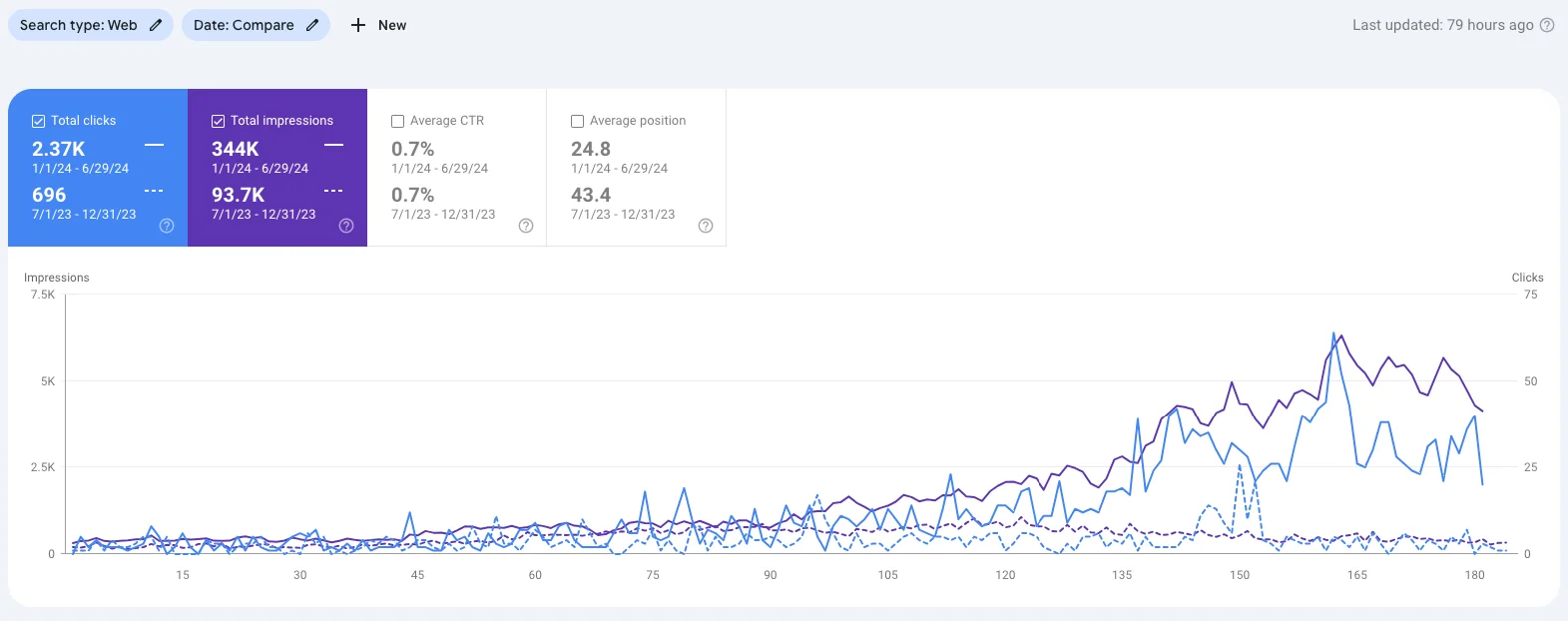
Eight months later, the site was ranking top 3 in the US for its core commercial terms, generating consistent inbound project inquiries from US-based real estate professionals, and sitting inside an organic system that compounds on its own.
A significant part of what moved rankings here was structural, the kind of fixes covered under technical SEO.
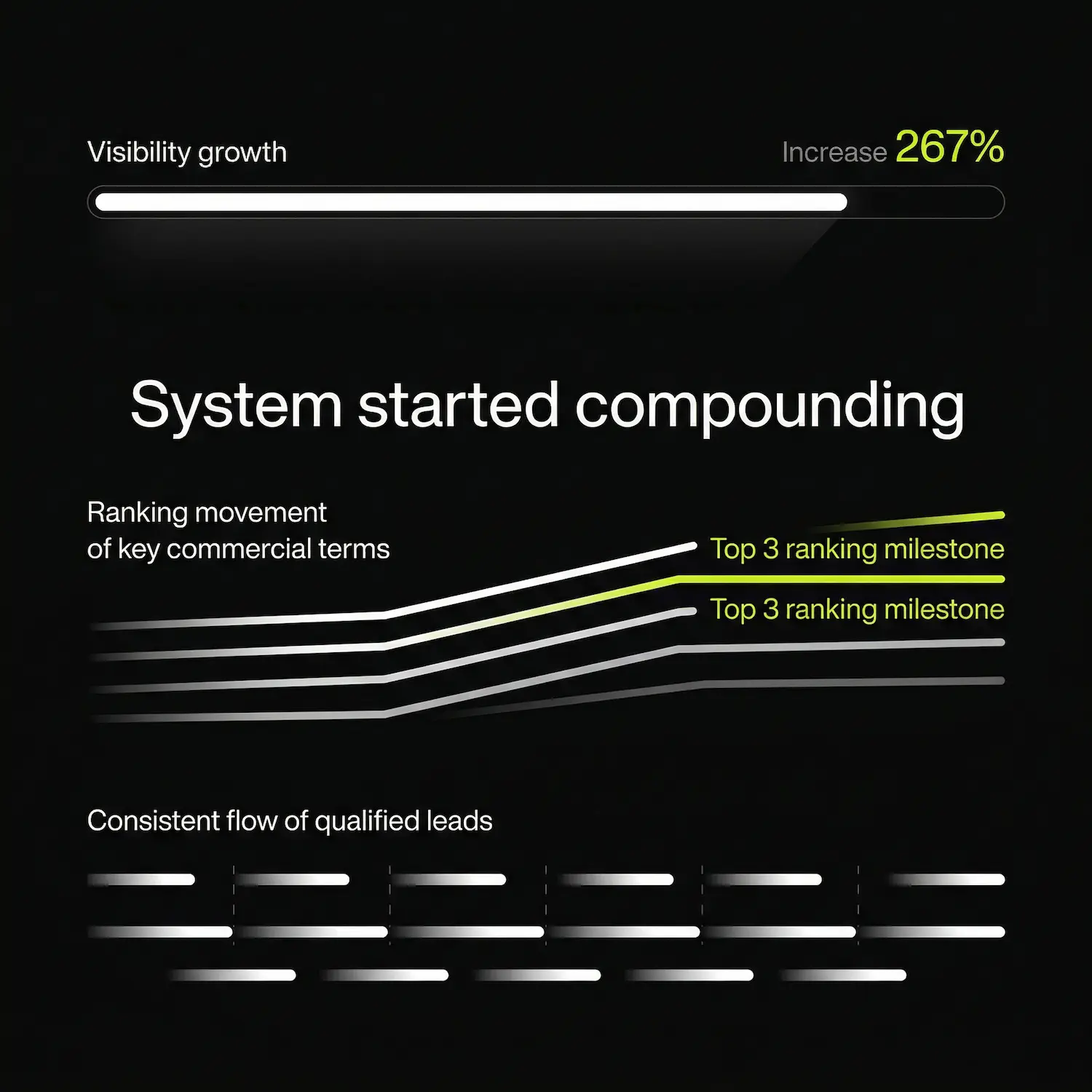
- Organic clicks grew from 696 to 2,370, a 240% increase.
- Organic visibility grew from 93,700 to 344,000, a 267% increase.
- Overall organic traffic increased by over 90%.
- "3D exterior rendering," "3D interior rendering," and "2D floor plan services" all moved from beyond position 100 to top 3 rankings in US search results.
Here is Exactly How That Happened: The Starting Point
When I took over, the three primary commercial keywords, “3D exterior rendering,” “3D interior rendering,” and “2D floor plan services,” were all sitting beyond position 100 in US search results. Not page two. Not even visible.
Organic traffic was near zero. The website was generating no leads from search. All US acquisitions depended on outreach and referrals.
This was not an optimization problem. There was nothing to optimize. It was a system design problem, and it needed to be treated as one.
The Diagnosis
Before touching anything, I looked at three things.
- How do US buyers in this niche actually search? Real estate professionals search based on outcomes. "3D exterior rendering for real estate listings," not "architectural visualization." That distinction changes how you build every page.
- Where does commercial intent already exist? In this niche, high-intent demand was there. People were already searching for these services in the US. The site simply was not positioned to capture any of it.
- What would realistically compound given the constraints? New domain, no authority, established competitors in the US market. Starting with blog content would have delayed meaningful results by months. Service pages had to carry the early acquisition load.
If people are already searching for what you offer but you’re not getting inbound, the problem isn’t visibility. It’s how your system is set up to capture it. That’s the first thing I look at.
That’s the first thing I look at when working as an SEO expert in Nepal.
The Strategy
Most early-stage SEO starts with blogs because blogs feel like progress. But informational content on a site with no authority and no commercial foundation does not move leads. It only delays them.
What I did was:
- I restructured the core service pages and re-built them optimized around specific high-intent queries.
- I cleaned up the URLs by implementing 301 redirects to unnecessary pages and fixing existing 404 errors. (The site had many demo pages indexed).
- I mapped them to buyer problems, structured to convert at the decision stage.
- I moved into blogs after optimizing the core service pages. The main purpose of creating blogs for this project was to strengthen topical authority and capture adjacent queries feeding the commercial funnel.
This is not a preference. It is a function of how commercial intent works. You meet buyers where they are in their decision process, not where it is convenient for your content calendar.
Results After 8 Months
- Organic clicks grew from 696 to 2,370, a 240% increase.
- Organic visibility grew from 93,700 to 344,000, a 267% increase.
- Overall organic traffic increased by over 90%.
- "3D exterior rendering," "3D interior rendering," and "2D floor plan services" all moved from beyond position 100 to top 3 rankings in US search results.

The site went from zero organic leads to 17 to 18 qualified project inquiries from US-based real estate professionals. Every single one came from organic search. The client had no organic lead baseline before this. These were entirely new acquisitions.
The content built during this period still appears in Google AI Overviews today for relevant queries including core commercial terms like 3D exterior renderings.
It is what happens when pages are built around genuine search intent rather than keyword stuffing
What I Learned From This Project
A few things became very clear by the end of this engagement.
- Sequencing matters more than volume. The instinct on a new site is to produce as much content as possible as fast as possible. That instinct is wrong. Ten well-structured service pages aligned with commercial intent will outperform fifty blogs on a site with no acquisition foundation.
- Targeting a foreign market from scratch is less about geography and more about understanding behavior. The difference comes down to how buyers search, what language they use, and what stage of decision they are in when they type a query.
- Technical SEO is table stakes, not a growth lever. Clean it up early, then move on. The sites that compound are the ones that got intent alignment right, not the ones with perfect scores.
If I did this again, I would introduce supporting blog content slightly earlier, specifically targeting informational queries and middle of the funnel queries that feed directly into the commercial pages.
The system worked as expected. The only adjustment would be introducing supporting content earlier to accelerate compounding.
Address
- Kathmandu, Nepal
- info@aruntamang.com.np